Quay Crane
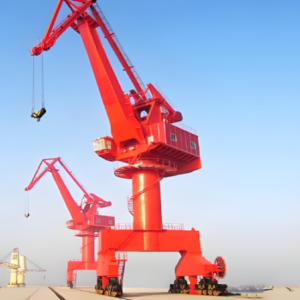
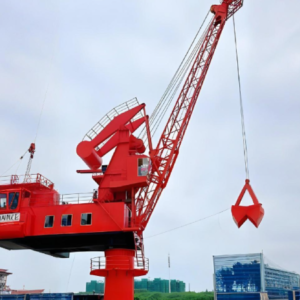
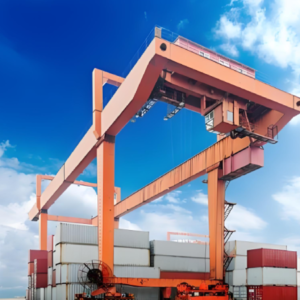
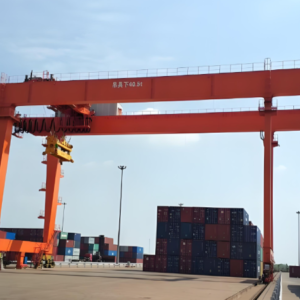
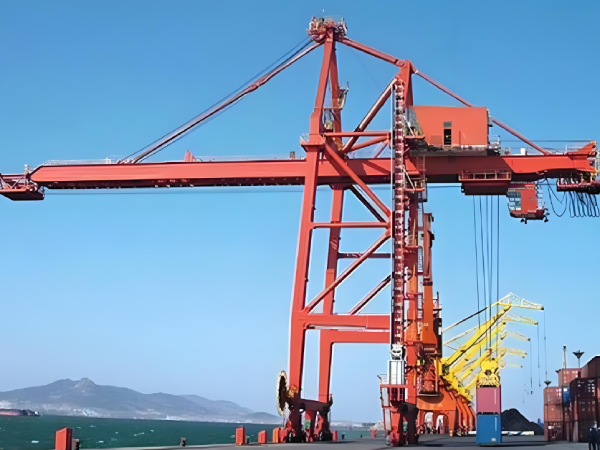
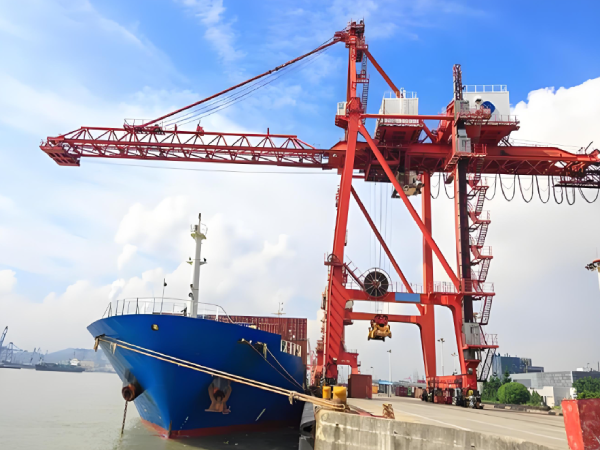
The Quay Crane is a heavy-duty, shore-mounted lifting workhorse engineered for high-efficiency loading and unloading of containers, bulk cargo, or project shipments between vessels and quaysides, serving as the backbone of global port logistics operations.
Description
Product Features of Quay Crane
The Quay Crane is the cornerstone of container terminal operations, serving as the critical interface between seagoing vessels and land-based transport systems. Its design focuses on maximizing throughput and handling the extreme dimensions of modern ultra-large container vessels.
1. Exceptional Reach and Lifting Height
- Ultra-Wide Span: Modern Quay Cranes are engineered with an outreach capability of up to 25 to 30 container rows (over 70 meters), allowing them to service the world’s largest container ships.
- High Stacking Capacity: The back reach and lifting height are designed to stack containers 8 to 10 high on the quay and lift them over 40 meters above the rail, accommodating the towering deck loads of mega-ships.
2. High-Speed Performance
- Rapid Cycle Times: Equipped with high-torque motors, the trolley and hoist systems can achieve speeds of over 240 meters per minute (trolley) and 90 meters per minute (hoist), drastically reducing the time per container move.
- Dual-Lift Capability: Advanced Quay Cranes feature twin-lift spreaders, enabling the simultaneous lifting of two 20-foot containers or a single 40-foot container, effectively doubling the loading efficiency.
3. Automated and Smart Technologies
- Auto-Landing System: Utilizes laser sensors and cameras to automatically position the spreader onto containers, reducing operator fatigue and the risk of damage during high winds or rough sea conditions.
- Remote Operation Stations: Many modern terminals utilize remote-controlled Quay Cranes, where the operator controls the machine from an air-conditioned office tower via high-definition cameras, improving safety and comfort.
4. Eco-Friendly Power Solutions
- Zero-Emission Operation: Unlike older diesel-powered models, modern Quay Cranes are typically powered by high-voltage shore electricity (6.6kV or 10kV), significantly reducing port emissions and noise pollution.
- Energy Storage Systems: Integrated capacitor banks or flywheels capture regenerative energy during lowering, feeding it back into the grid to power other equipment.
Maintenance of Quay Crane
Given the Quay Crane’s massive size and exposure to harsh marine conditions (salt spray, wind, and humidity), a proactive maintenance strategy is essential to prevent costly downtime.
1. Structural Integrity & Corrosion Prevention
- Anti-Corrosion Painting: The steel structure is constantly exposed to saltwater. Regularly inspect and repair the paint coating (often requiring multi-coat systems) to prevent rust and structural fatigue.
- Boom and Leg Inspections: Conduct periodic Non-Destructive Testing (NDT) on the boom, legs, and A-frame to check for weld cracks, especially at connection points that experience high stress during wind storms.
2. Wire Ropes and Reeving Systems
- Rope Inspection: The hoisting ropes are the lifeline of the Quay Crane. Use magnetic flux leakage testing to detect internal wire breaks or corrosion that is invisible to the naked eye.
- Sheave Maintenance: Ensure the groves of the hoist and trolley sheaves are properly lubricated and not worn, as worn sheaves can accelerate rope failure.
3. Drive Systems and Gearboxes
- Gearbox Lubrication: The massive gearboxes driving the hoist and trolley require strict oil analysis and temperature monitoring. Any deviation in vibration or temperature can indicate bearing failure.
- Brake Systems: Inspect the service and emergency brakes daily. Ensure the brake linings have sufficient thickness and that the hydraulic release systems are functioning correctly.
4. Spreader and Hydraulics
- Spreader Maintenance: The spreader undergoes the most wear. Check twist locks, guide pins, and the hydraulic cylinders for leaks. Ensure the telescopic beams move freely.
- Cabling Management: Inspect the festoon cables (power and data cables running along the boom) for fraying or fatigue. These cables are prone to damage from constant flexing and wind whip.
Additional information
| Lifting Height | 35~65 meters |
|---|---|
| Outreach | 30-65 meters |